Roof tear-offs generate high-density weight rapidly, making cubic-yard volume a secondary factor behind weight management. A standard square of three-tab asphalt shingles weighs roughly 250 pounds, while architectural…
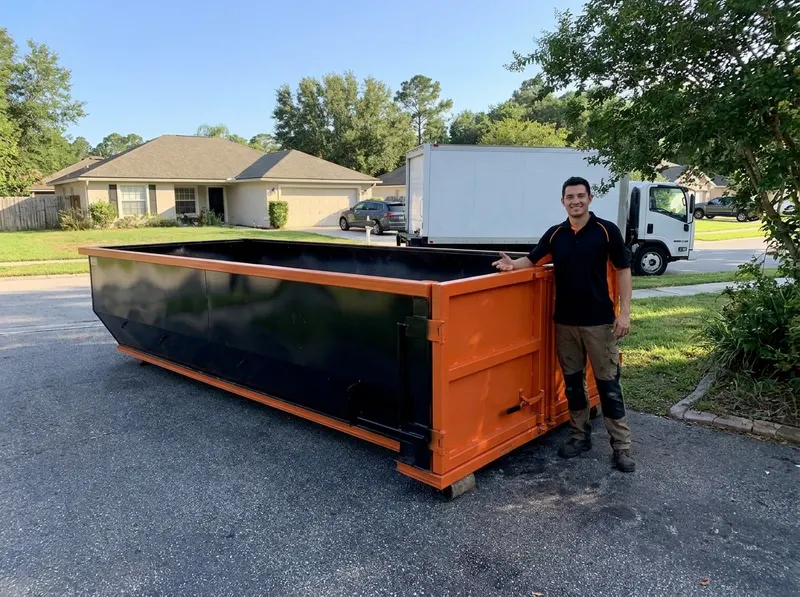
Roof tear-offs generate high-density weight rapidly, making cubic-yard volume a secondary factor behind weight management. A standard square of three-tab asphalt shingles weighs roughly 250 pounds, while architectural shingles approach 400 pounds per square. In historic neighborhoods like Riverside, Avondale, and Springfield, residential lots often feature narrow shared drives or decorative brick pavers. Placing a heavy steel roll-off directly onto these surfaces causes structural cracking, so heavy protective wooden boards must sit beneath the container rollers before drop-off. For bungalows in San Marco or Ortega, a 10-yard dumpster priced at $595 handles up to 25 squares of single-layer shingles without exceeding gross axle ratings. When working larger properties along Mandarin Road or newer developments across Oceanway and the Southside, tear-offs involving multiple felt layers require a 20-yard dumpster at $695 to retain sufficient sidewall clearance.
Selecting container size requires matching roof squares to box capacity. While a cleanout service charges by truck volume after the fact, a dedicated roofing container operates on predetermined flat-rate hauling. A 10-yard container holds debris from small garage or porch reroofs. A 15-yard dumpster at $650 accommodates mid-sized homes between 25 and 35 squares. A 20-yard container at $695 serves standard residential homes up to 50 squares. Larger multi-pitch structures in Arlington or commercial pitches near Northside require a 30-yard dumpster at $795 or a 40-yard dumpster at $895. The primary operational trade-off centers on physical footprint versus load distribution: smaller tubs take up zero excess driveway width but fill to water-level quickly, whereas larger 30-yard and 40-yard units require at least 60 feet of straight truck-approach clearance from the street curbside.
Smooth drop-offs follow three distinct steps. Step 1: Clear the staging area of parked vehicles, low-hanging tree branches, and trash bins before the carrier vehicle turns off thoroughfares like Roosevelt Boulevard or Atlantic Boulevard. Step 2: Receive the container directly onto placement boards positioned parallel to the garage door to keep foot paths clear for roofers stripping eaves. Step 3: Load shingles evenly across the bed floor rather than mounding in the center, keeping all nails, tar paper, and discarded aluminum drip edges strictly below the container rim to satisfy Florida road safety transit laws before pickup.
Every job gets a firm, written price after a free on-site visit.
Tell us about your roofing shingle dumpster job in Jacksonville and we'll send a clear, written quote, usually the same day.
 Meadow Creek Dumpster Rental